Genoa, Genoa CFC and the English
Following the traces of the British community in the city
An urban trail exploring the deep connection between Genoa and its nineteenth-century British community, which played a leading role in the city’s economic, industrial and cultural development.
With the expansion of the Kingdom of Sardinia’s railway network – the Genoa–Turin line opened in 1854 – and the subsequent opening of the Suez Canal in 1869, Genoa’s port became a key hub for trade with Great Britain. The British presence grew, influencing the port, industry, commerce and cultural life.
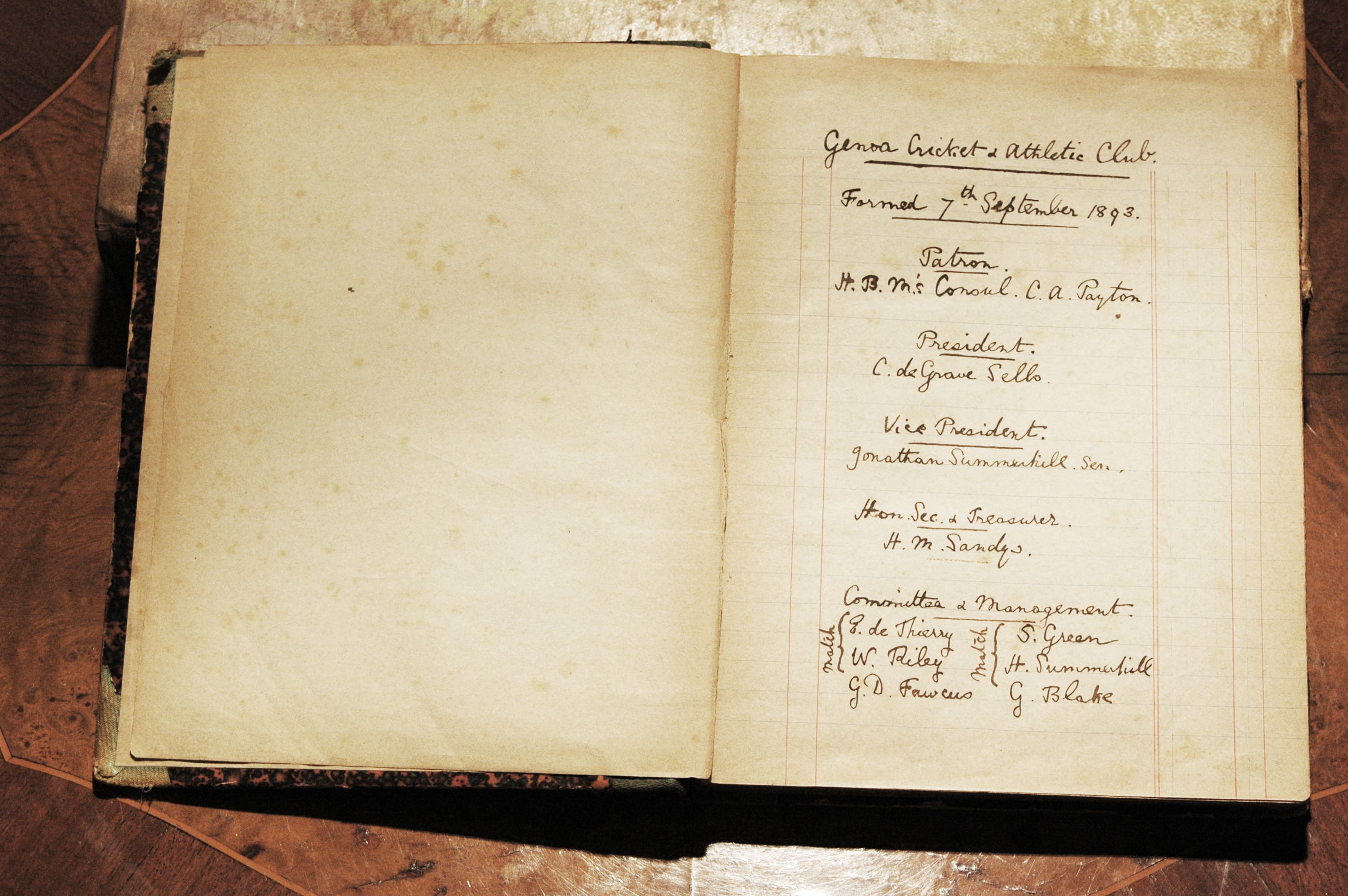
The British also brought a new understanding of sport: as education, discipline and social development, as well as recreation. On 7 September 1893, Genoa Cricket and Athletic Club was founded at the British Consulate in Via Palestro by British nationals who were well integrated into city life. A few years later, thanks in part to Dr James Spensley, the Club welcomed Italian members and became Genoa Cricket and Football Club, winning the first Italian Championship in 1898.
- Piazza Caricamento – the multicultural heart of the nineteenth-century port.
- Piazza Campetto – following the traces of James Spensley and Genoa’s earliest gatherings.
- Palazzo Ducale – culture and clubs frequented by the British community.
- Villetta Serra (Acquasola) – a former Genoa headquarters.
- Via Palestro – the location of the British Consulate where the Club was founded.
- Castello Mackenzie – a symbol of British entrepreneurship in the city.
- Sant’Anna funicular – built by the Englishman Frederick Brown.
- Chiesa delle Vigne – a place associated with the beginnings of Italian Catholic scouting, founded by Spensley.
- Genoa History Museum – the final stop, where history takes shape through memorabilia, documents and the ball from the first Italian Championship.
This historic connection between Genoa and the British community is still alive today. Genoa and the British – the map
In the 2025/2026 season, Genoa celebrated its English origins with the launch of its away kit and the campaign “It’s coming home”, dedicated to football’s journey from England to its Italian home. Part of the campaign was produced in London, in the neighbourhood where James Richardson Spensley, one of the Club’s pioneers, was born.